Geyser Repair
East London
Most of the geyser repair East London homes need comes down to one failed part: an element, a thermostat or a valve. We find which one, show you, and price that repair before a replacement is mentioned.
Request a call-out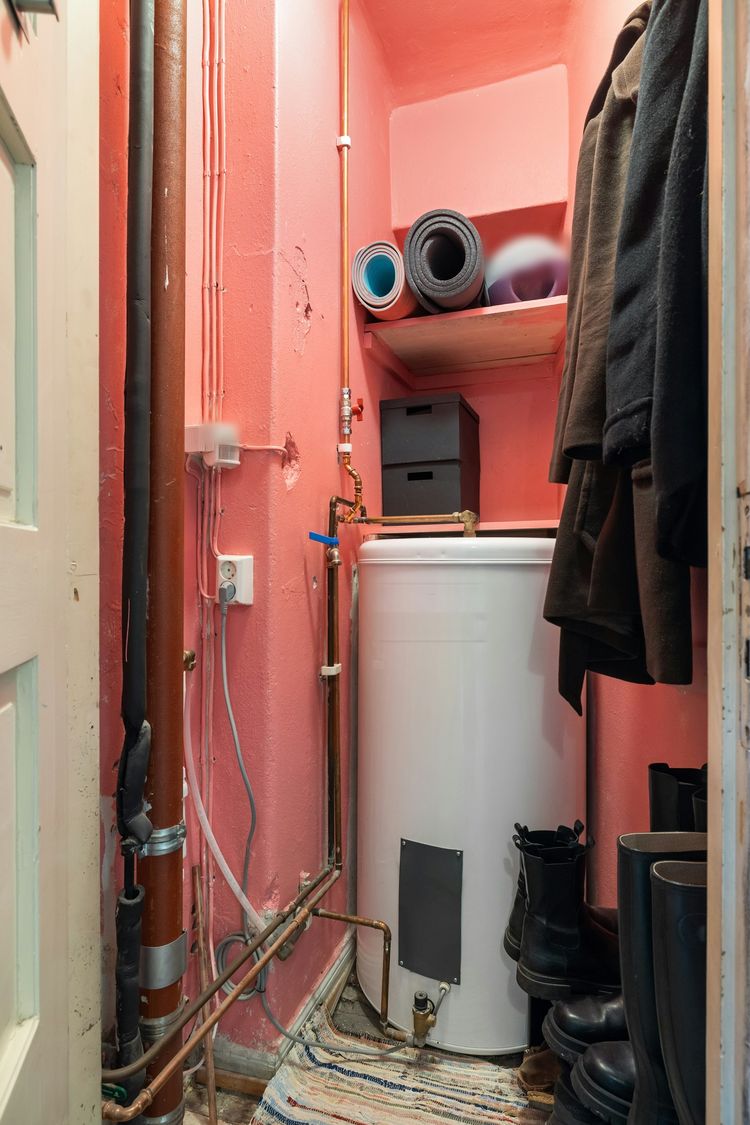
What geyser repair covers
The parts that fail, and the signs that tell them apart.
An electric geyser is a tank, an element that heats the water, a thermostat that switches the element, and a set of valves that keep the pressure safe. Most faults sit in that list. No hot water at all usually points to the element, the thermostat or the circuit. Water that is far too hot points to the thermostat. A drip from the overflow pipe outside points to a valve, or to a geyser seeing more pressure than it should.
The tank is the one part that cannot be repaired. When the cylinder leaks through its wall or its seams, the geyser has to be replaced, which is a different job with its own rules: see geyser installation.
A repair also includes a look at what surrounds the geyser, because SANS 10254 sets out how it must be connected: the drip tray, the vacuum breakers, the discharge pipes. A geyser that keeps failing often has an installation problem rather than a bad part.
Salt air reaches the roof space
Why geysers near the East London coast fail on the outside before the inside.
South Africa's national corrosion map rates the air in the first 150 m from the shoreline as extremely corrosive, CX on the international scale, and the zone from 150 m to 1 km as high to very high, C4 to C5. East London was one of the sites in the long-term exposure programme behind that map. The beachfront streets of the Quigney, Nahoon, Bonza Bay and Gonubie sit inside that first kilometre.
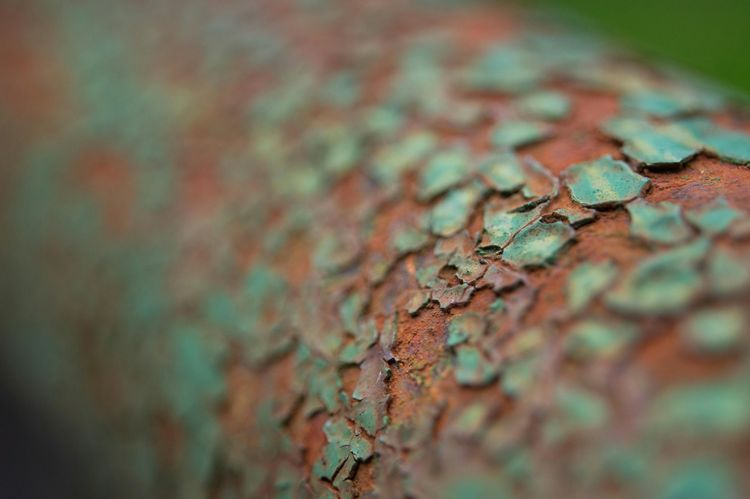
A geyser is a steel tank in a steel casing, in a roof space that breathes outside air. East London's mean relative humidity is 76%, and rain falls in every month of the year, so the air in a roof rarely dries out. Salt that settles on a casing, a drip tray or a valve body stays damp, and damp salt is what drives corrosion.
The result is a set of faults that can look like a geyser at the end of its life: rusted casings and trays, valve bodies that weep, element bolts that seize. Often it is one part that can be replaced on its own, for far less than a new cylinder. The test is whether the tank itself is sound.
Then there is the water. Flood sediment clogged the Umzonyana treatment works' filters in January 2022, and in December 2025 a power failure there brought a warning that tap water might look cloudy. Fine sediment that gets through settles at the bottom of a geyser, where it coats the element and makes it work harder to heat the same water.
If you live near the sea, look at the geyser casing and drip tray once a year. Rust you catch early is a valve or a tray. Rust you find from a wet ceiling is a new cylinder.
Repair first, and the reason in writing
Four commitments on every geyser job, so you pay for a part, not a guess.
Repair first, in writing
If the tank is sound, we quote the repair. If we say the geyser needs replacing, the reason is on the quote: a leaking cylinder, not a guess.
The installation checked, not just the part
Vacuum breakers, discharge pipes, the drip tray and pressure control are checked against SANS 10254 while we are in the roof. A part that keeps failing usually has a reason.
Common parts on the first visit
Elements, thermostats and the usual valves come with us, so a straightforward repair does not need a second trip.
Ready for an insurance claim
If it is a claim, you get the cause of failure in writing, photographs, and the old parts kept for the assessor.
How a geyser repair works
Test, then price, then fix.
- 1
Tell us the symptom
No hot water, too hot, dripping, tripping or noisy. Choose Geyser repair on the form and say which.
- 2
Find the failed part
We test the element, thermostat and circuit, and check the valves and the pressure going into the geyser.
- 3
Price the repair
You get the part and the price in writing. If the tank is leaking, you get the replacement options instead.
- 4
Repair and test
We fit the part, refill, check for leaks, and wait for it to heat and switch off at the right temperature.
Geyser repair questions
Including the one about whether to repair it at all.
How much does geyser repair cost in East London?
It depends on the part, and a repair is a small bill next to a replacement: Kandua's 2026 guide puts a new 150-litre geyser at R5,000 to R10,000 for the unit alone, before labour and valves. Once the faulty part is identified you get the repair price in writing; the call-out fee you hear before anyone drives out.
Should I repair or replace my geyser?
Repair it if the tank is not leaking. A leaking cylinder cannot be repaired. Age and condition matter too: when an old geyser's casing and fittings are badly corroded, the next repair may cost more than it is worth, and if so we say it on the quote with the reason.
Why is water dripping from the pipe outside my house?
That pipe carries water from the geyser's pressure control valve or its temperature and pressure (T&P) valve. Buffalo City's by-law requires it to end where the water can readily be seen, precisely so you notice. A small drip while the geyser heats can be normal expansion; a steady flow usually means a valve has failed or the incoming pressure is too high.
My geyser trips the electricity. Is it the geyser?
Often it is the element: when its sheath fails, water reaches the wiring and trips the earth leakage. It can also be the thermostat or the wiring itself. We test which before replacing anything, because an element that was never faulty is money spent for nothing.
Why does my geyser rumble?
Usually sediment on the bottom of the tank, with water boiling in pockets underneath it as the element heats. In East London sediment can arrive after floods and outages, when the water runs cloudy. Draining and flushing can help; an element buried in sediment may need replacing.
How long does a geyser last at the coast?
There is no published figure for East London, so we will not invent one. The national corrosion map shows steel within 150 m of the shore corroding far faster than further inland, and on a geyser the casing, tray and valves go first. A yearly look in the roof is the cheapest way to make yours last.
Does a geyser repair come with a certificate of compliance?
Replacing a geyser or its safety valves is work Buffalo City's by-law reserves for a registered plumber, and the Plumbing Industry Registration Board expects a Plumbing Certificate of Compliance on geyser work. Ask us on the quote which paperwork your job comes with.
Can a geyser be serviced so it does not burst?
A yearly check of the valves, drip tray, casing and pressure, with the sediment drained, catches most of the faults on this page before they become ceiling damage. It will not make an old cylinder new.
Request a call-out
Tell us what is happening and where. We phone you back to confirm a time and what we are bringing.
There is no phone line on this website on purpose: every request lands with a person who phones you back, so nothing depends on catching someone between jobs.
Where we work in East London
A service-area business: we come to you, anywhere in the suburbs below and the rest of Buffalo City.
City centre and beachfront
CBD, Quigney, Arcadia, North End, Belgravia, Southernwood, Panmure
Berea side
Selborne, Berea, Vincent, Vincent Heights, Stirling, Bunkers Hill, Baysville, Woodleigh
Nahoon to Gonubie
Nahoon, Nahoon Valley, Bonnie Doon, Abbotsford, Dorchester Heights, Beacon Bay, Bonza Bay, Gonubie, Sunrise-on-Sea
West and north-west
Cambridge, Chiselhurst, Amalinda, Haven Hills, Braelyn, Buffalo Flats, Scenery Park, Reeston, Mdantsane
West Bank and the coast
West Bank, Greenfields, Sunnyridge, Woodbrook, Cove Rock, Winterstrand, Kidd's Beach
Industrial areas
Wilsonia, East London IDZ, Braelyn Industrial