CCTV Drain Inspection
East London
A CCTV drain inspection East London neighbours, insurers and the municipality can all follow shows what is wrong inside the drain, where, and how far from the inspection eye. You keep the footage.
Request a call-out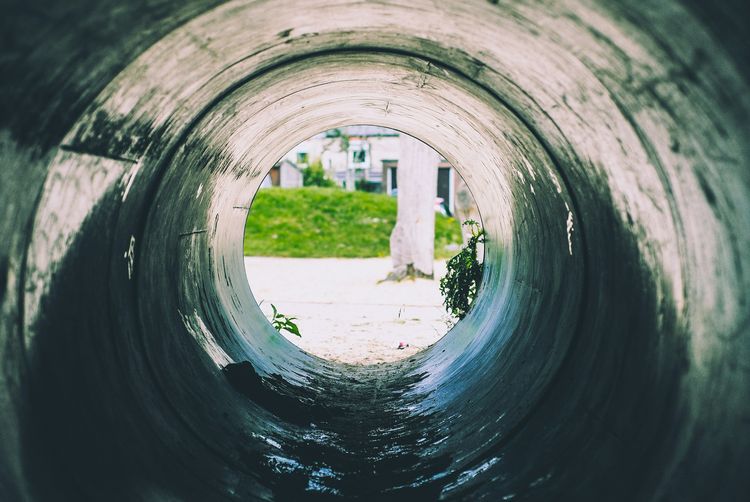
What a drain camera shows
The inside of the pipe, with the distance measured.
The camera goes in at an inspection eye or rodding point and travels along the pipe, recording as it goes, with the distance from the entry point on screen. A locator above ground then finds the camera head, so a break found several metres down the line is marked on the surface instead of guessed at.
On screen you see what the pipe is doing: a crack, a joint pulled open, a dip where waste collects, a root through a seal, a lining of fat, or a toy that went down the toilet. It also shows when a pipe is fine, which is worth knowing before anyone quotes to replace it.
A camera does not clear a blockage. A drain that is completely blocked is cleared first and then filmed, so the camera sees the pipe and not the blockage: see blocked drains.
Footage settles who pays
Shared drains, flat sewers and a tariff that charges according to whose section it is.
Buffalo City's tariff book charges differently depending on where a blockage is: R1,581.85 a property on a combined drain shared by several properties, and a minimum of R3,161.69 when it is on a section serving one property. The by-law makes owners who share a drain jointly responsible for it. Exactly where a fault sits is therefore not a detail. It decides the bill.
Without a camera, that question gets answered by rodding until something gives, and paid for again every time the drain blocks. With one, the footage shows the distance to the fault and the locator puts a mark on the ground: before or after the boundary, on your branch or on the shared line.
Some causes are structural, and no amount of rodding fixes them. Buffalo City's own sewers include sections so flat that sewage barely flows, which cause repeated blockages, and private drains can sag the same way. On camera, a sag shows as standing water in a length of pipe that should be empty.
The footage is also evidence for whoever pays for the repair. An insurer wants to see the cause and location of damage, and a buyer wants to know what the drains are like before transfer. A recording with distances on it is something both can follow.
If a drain blocks twice in a year, film it before you pay to clear it a third time. Kandua's 2026 guide puts an inspection from one access point at R1,500 to R3,500, about the price of two roddings at published rates.
Footage that answers the question
Pictures are only useful if they settle who pays and what to fix.
Footage you keep
The recording is yours, to show a neighbour, an insurer, a buyer or the municipality.
Distances and a mark on the ground
Every fault with its distance from the entry point, and the spot marked above it.
A straight answer on whose side
Your branch, the shared drain or the municipal sewer, stated in the report.
The fix in writing, not just pictures
What the fault needs, from clearing to a new section of pipe, priced line by line.
How a drain inspection works
Clear, film, locate, report.
- 1
Clear if needed
A full drain is opened up before the camera goes in.
- 2
Film the line
The camera runs from the inspection eye along the drain, recording with distances.
- 3
Locate and mark
Faults found on screen are located from above and marked on the ground.
- 4
Report
Footage, photographs, distances and whose section each fault is on, with the repair options priced.
Drain camera questions
Cost, footage and what a camera cannot do.
How much does a CCTV drain inspection cost in East London?
Kandua's 2026 national guide puts a residential inspection from one access point at R1,500 to R3,500, averaging about R2,600. The price rises with longer runs and more access points. You hear ours on the call back, after we ask about the property and the drain.
Do I get to keep the footage?
Yes. The recording and the report are yours, to use however you need: with a neighbour, an insurer, a buyer or the municipality.
Can a drain camera find a water leak?
It finds breaks and open joints in drains, which is where waste water escapes. Leaks on the pressurised water supply are a different job: see leak detection.
Should I have the drains inspected before buying a house?
In an older house, or one with a history of blockages, it is a small cost next to a drain you inherit. The footage also gives you something specific to negotiate with.
Can the footage be used for an insurance claim?
It shows the cause and the location of damage, which is what an insurer asks for. Whether the claim pays depends on your policy.
Does the camera unblock the drain?
No. A fully blocked drain is cleared first, then filmed. Filming a blockage shows you the blockage, not the pipe.
Request a call-out
Tell us what is happening and where. We phone you back to confirm a time and what we are bringing.
There is no phone line on this website on purpose: every request lands with a person who phones you back, so nothing depends on catching someone between jobs.
Where we work in East London
A service-area business: we come to you, anywhere in the suburbs below and the rest of Buffalo City.
City centre and beachfront
CBD, Quigney, Arcadia, North End, Belgravia, Southernwood, Panmure
Berea side
Selborne, Berea, Vincent, Vincent Heights, Stirling, Bunkers Hill, Baysville, Woodleigh
Nahoon to Gonubie
Nahoon, Nahoon Valley, Bonnie Doon, Abbotsford, Dorchester Heights, Beacon Bay, Bonza Bay, Gonubie, Sunrise-on-Sea
West and north-west
Cambridge, Chiselhurst, Amalinda, Haven Hills, Braelyn, Buffalo Flats, Scenery Park, Reeston, Mdantsane
West Bank and the coast
West Bank, Greenfields, Sunnyridge, Woodbrook, Cove Rock, Winterstrand, Kidd's Beach
Industrial areas
Wilsonia, East London IDZ, Braelyn Industrial