How long does a geyser last? The geyser maker Kwikot says a quality electric geyser serviced every three to four years lasts 8 to 12 years, and that without servicing, failure often comes within 5. There is no published figure for East London. What a geyser here does have is three things working against it: salt in the air of the roof space, grit in the water after floods and outages, and pressure swings every time the supply empties and refills.
This guide from The East London Plumbers takes those three in turn, then the signs that a geyser is near the end and the point where repairing it stops making sense. It covers what to look for and when to call, not how to take a geyser apart.
How many years should a geyser last?
The makers' and insurers' numbers sit close together. Kwikot's guide gives 8 to 12 years for a well-maintained electric geyser and as few as 5 without servicing, and it puts the life of the heating element at 5 to 7 years in most South African water. A 2021 Santam article put it more bluntly: "Most geysers only have a seven-year lifespan."
Those are national figures, and they hide something useful. A geyser is not one part. The element, the thermostat, the valves and the sacrificial anode are each replaced on their own when they fail. The steel cylinder is the only part that cannot be repaired, so the real question is how long the tank lasts, and that comes down to what is working on it from the outside and from the inside.
When the tank does go, the answer is a new geyser with its valves, drip tray and discharge pipes, which is what geyser installation in East London covers. Until then, most faults are parts.
What shortens a geyser's lifespan at the coast
Salt air in the roof space
East London was one of the sites in South Africa's long-term atmospheric corrosion study, and the national corrosion map published in 2019, which draws on that work, is blunt about the coast. The air within the first 150 m of the sea rates as extremely corrosive, CX on the ISO scale, and mild steel exposed there lost an average of 319 micrometres in its first year. From 150 m to 1 km the rating is high to very high, C4 to C5, and from 1 to 3 km it is moderate, C3.
The same study found that how corrosive a particular spot is depends on the surf, the altitude, the lie of the land, the temperature and the onshore wind. Streets along the Esplanade and the beachfront roads of Nahoon, Bonza Bay and Gonubie sit inside that first kilometre. The Berea, Vincent and Cambridge are further inland and higher up, and two houses the same distance from the sea can still wear differently.
Humidity does the rest. East London's mean relative humidity is 76%, and the city has no true dry season, so the air in a roof space seldom dries out. Salt that settles on a geyser's casing, its drip tray, the valve bodies and the bolts around the element stays damp, and damp salt keeps corrosion going.
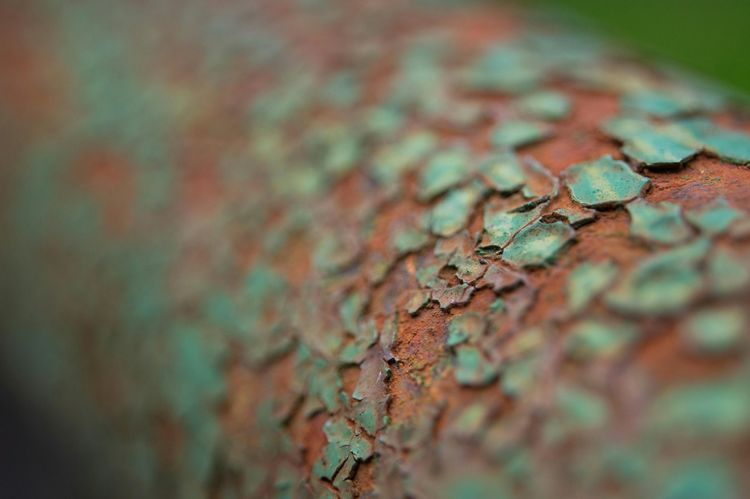
For a sense of scale, the Hot Dip Galvanizers Association says a galvanised steel structure more than 6 mm thick may keep over 70 micrometres of zinc after 25 years in a moderate inland zone, while the same structure on a C5 coast may need recoating or replacing within 15 years. A geyser is not a steel structure, and nobody has measured geysers this way, but the direction is the same: the closer to the surf, the faster bare steel goes.
On a geyser, salt air usually shows on the outside first: a rusted casing, a drip tray that has rusted through, valves that weep, element bolts that will not turn. Many of those are parts. The tank only becomes the problem when the steel of the cylinder itself starts to leak.
Grit in the water after floods and outages
The Umzonyana treatment works supplies about 80% of the urban area's water, and floods and power failures have disrupted it more than once. In January 2022 flash floods made the water so turbid that sediment clogged the works' filters, and Vincent, Beacon Bay, Gonubie, Amalinda and Scenery Park were among the suburbs that lost water. In December 2025 cable theft took the works offline, and residents were warned that the water might look cloudy.
What happens next is general plumbing rather than East London data. Fine sediment that gets through the mains settles at the bottom of a geyser, which is where the element sits. A layer of it around the element makes the element run longer to heat the same water, and it is behind the rumbling some geysers make as they heat. The same grit can lodge in the strainer of a pressure control valve and stop it closing properly.
One thing this guide will not say is that East London's water is hard or soft. No published hardness figure for the city's tap water could be found, so limescale is not the documented problem here. Sediment after floods and outages is.
Pressure swings when the supply empties and refills
Kwikot's guide is plain about why tanks fail: geysers burst because the inner tank flexes as pressures rise and fall, and one of the common causes is a pressure control valve that has failed or is missing, which lets full mains pressure into the tank.
East London's supply has emptied and refilled repeatedly in the last few years. In August 2025 a major burst on a main pipeline from Umzonyana cut the flow into several reservoirs, affecting areas including Scenery Park, Amalinda, Duncan Village, Vincent, Beacon Bay and Gonubie. In January 2026 a leak on one of the 600 mm trunk mains left the Vincent Reservoir critically low, with Nahoon Valley Park, Dorchester Heights, Bonnie Doon, Nahoon, Vincent and Bunkers Hill affected. After the 2022 floods the metro cut the supply every night from 22h00 to 04h00 to build up storage for the high-lying areas.
As a general rule, when the water comes back it brings air and a surge with it. The pressure control valve and the vacuum breakers on a geyser are there to take those shocks so the tank does not. Where they work, the tank barely notices. Where the pressure control valve has failed, every refill is a jolt the cylinder takes directly, and a steady drip from the overflow pipe outside is often the first sign.
The thermostat and the installation
Kwikot also names the thermostat setting and the quality of the installation, along with the water and the anode, as the things that decide how long a geyser lives. A thermostat that has failed closed keeps the element running, and a geyser fitted without working pressure control, or with a drip tray that cannot drain, starts its life at a disadvantage.
Signs a geyser is near the end
These point at the tank, which is the one part that cannot be repaired:
- Water leaking from the cylinder itself, not from a valve, a fitting or the overflow pipe
- Rust-coloured water from the hot taps only, while the cold runs clear
- A casing rusted right through, with water weeping from the cylinder underneath
- The same fault back within months, on a geyser already past the makers' range
These usually point at a part, which is a repair:
| What you notice | What it usually points to |
|---|---|
| No hot water, and the ceiling is dry | The element, the thermostat or the circuit |
| The board trips when the geyser switches on | An element whose sheath has failed |
| Water far too hot, or hissing from the relief valve | The thermostat, or the temperature and pressure valve |
| A steady drip from the overflow pipe outside | A valve, or more incoming pressure than the geyser should see |
| Lukewarm water that runs out quickly | The element or thermostat, or sediment around the element |
| Rumbling or ticking while it heats | Sediment on the bottom of the tank |
Telling these apart is what a repair visit is for, and geyser repair in East London explains how each part is tested before anyone talks about a new cylinder.
Repair or replace: where the line falls
The rule is short. If the cylinder is leaking, the geyser is replaced. With a sound cylinder, only the failed part changes: swapping an element, a thermostat or a valve is far less work than fitting a new geyser.
The grey area is an old geyser with a sound tank and a lot of rust around it. Three questions help:
- How old is it? Past the 8 to 12 years Kwikot gives for a serviced geyser, each new part goes into a tank that is already beyond the makers' range.
- How many repairs this year? A second or third call-out on the same geyser in a short time is a sign that the next repair may cost more than it is worth.
- Is it in the right place? A replacement is the moment to fix what the old installation lacked, such as a drip tray that does not drain, or to move a geyser out of a roof that is hard to reach.
A planned replacement happens on a dry day, at a time you choose. An unplanned one usually starts with water through a ceiling.
Either way it is a plumber's job. Buffalo City's water by-law reserves replacing a geyser or its safety valves for a registered plumber, or someone working under one.
Helping a geyser last at the coast
None of this is a do-it-yourself list. It is what to ask for, and what is worth a look:
- A service every three to four years. Kwikot's guide has a registered plumber check the anode, the element and the thermostat at that interval.
- The anode, especially. It is a magnesium or aluminium rod that corrodes so the steel tank does not, and Kwikot says to replace it once more than half of it has gone. When it is used up, the tank is next.
- A yearly look near the sea. From the roof hatch, with a torch: rust on the casing, the drip tray or the valves. Caught there, it is usually a part. Found through a wet ceiling, it is usually a cylinder.
- The overflow pipe after an outage. A drip that does not stop once the supply has settled is worth a call, because it usually means a valve is no longer holding.
When it is time to call
If your geyser is past the age makers expect, rust is showing on the casing or tray, or water is coming from the tank itself, it is time for a plumber to look at it. Requests come in through the call-out form rather than a phone line: request a call-out, choose geyser repair or geyser installation, and say roughly how old the geyser is and what you have noticed.